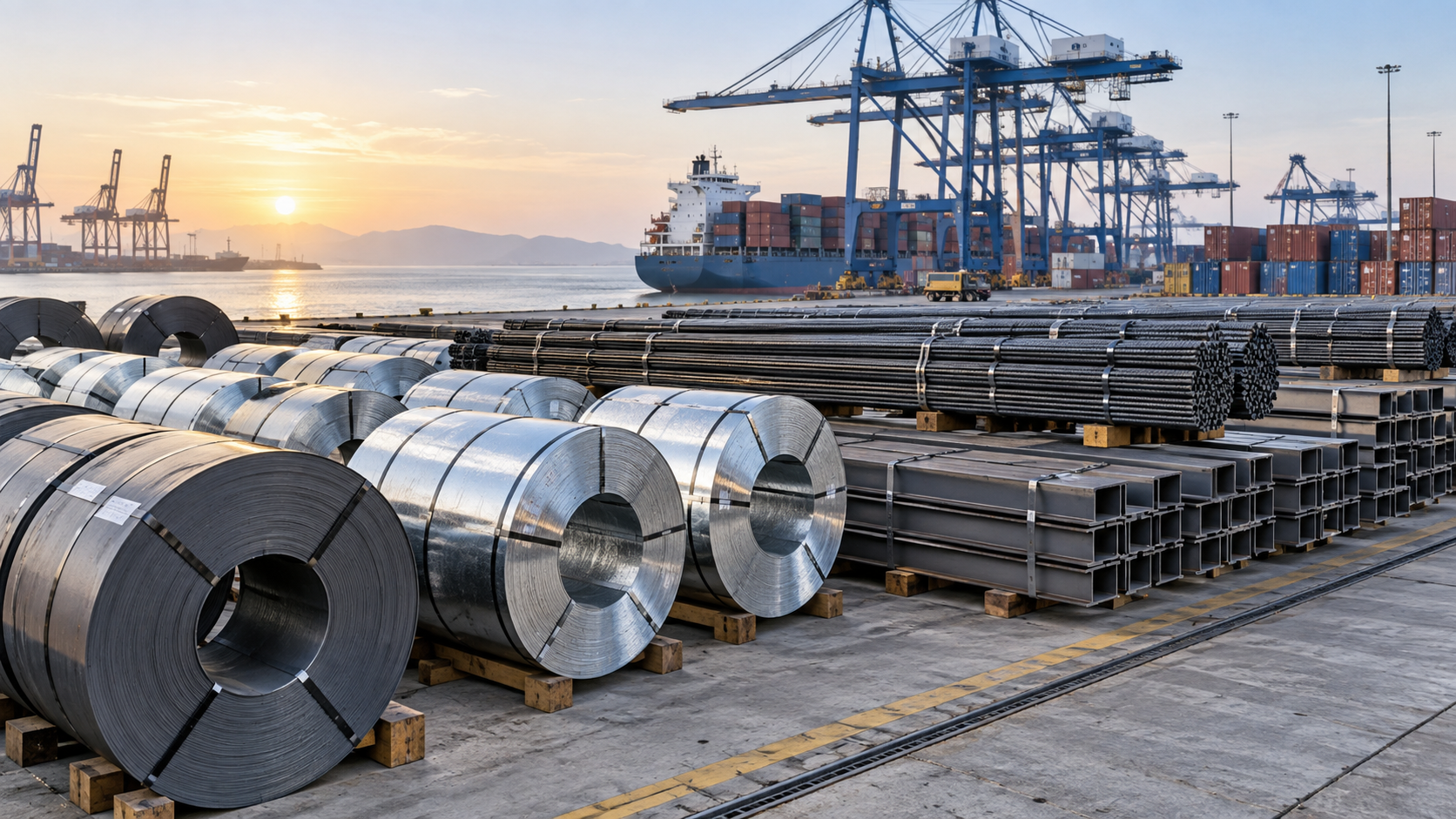
1) Export demand is still a product-by-product market.
China steel export buyers are entering the September 30 booking window with a split reading of the market. Trading Economics noted that profitability at Chinese steelmakers has deteriorated under high production costs and weak steel demand, while recent Chinese housing data still point to pressure on domestic consumption.
That backdrop keeps mills and traders focused on export channels, but it does not make every product equally easy to buy. Coated sheet, hot-rolled coil, rebar, sections and plate each carry different lead times, certification questions and destination risks, so the useful signal is product fit rather than headline tonnage.
2) Finished-steel mix matters more than volume alone.
IndexBox reported that global steel flows rose 1 percent in July 2026, with China driving growth while non-China volumes weakened. For buyers, that contrast means China can remain a major source of available steel even when other lanes feel softer or less reliable.
The practical question is whether the available mix matches the job. A project buyer asking for galvanized coil, H beam, angle, channel, rebar or plate should confirm standard, grade, size, surface condition, packing method and mill certificate wording before comparing offers only by price.
3) Port execution and trade checks stay inside the buying decision.
Trade-friction exposure remains part of the export conversation because finished steel orders can move across anti-dumping, safeguard, origin and customs-document checks. The risk is not only whether a cargo can be produced, but whether it can be described, certified and shipped in a way that the destination will accept.
That makes port discipline a commercial issue. Buyers should align shipment window, destination port, container or breakbulk choice, loading photos, packing list detail and certificate language before the pro forma invoice is treated as executable.
4) YQ Steel's working view for September 30.
YQ Steel reads today's China export market as a finished-steel selection market. Weak domestic demand signals may keep export offers active, but the winning order is the one that matches product specification, documentation and port timing at the same time.
For October purchasing, the best inquiry is specific from the first message: product name, standard, grade, size range, quantity, destination, required shipment window, packing preference and certificate wording. That gives the supplier room to check mill availability and export execution before loading pressure starts.