1) Export volume is active, but the mix matters more.
Late-September steel export signals still point to active Chinese supply, but buyers are reading the market through product mix rather than tonnage alone. Recent IndexBox coverage said global steel flows rose in July 2026 with China driving the growth, while non-China volumes weakened. That keeps China central to export sourcing, but it also raises the value of choosing the right finished-steel category for each route.
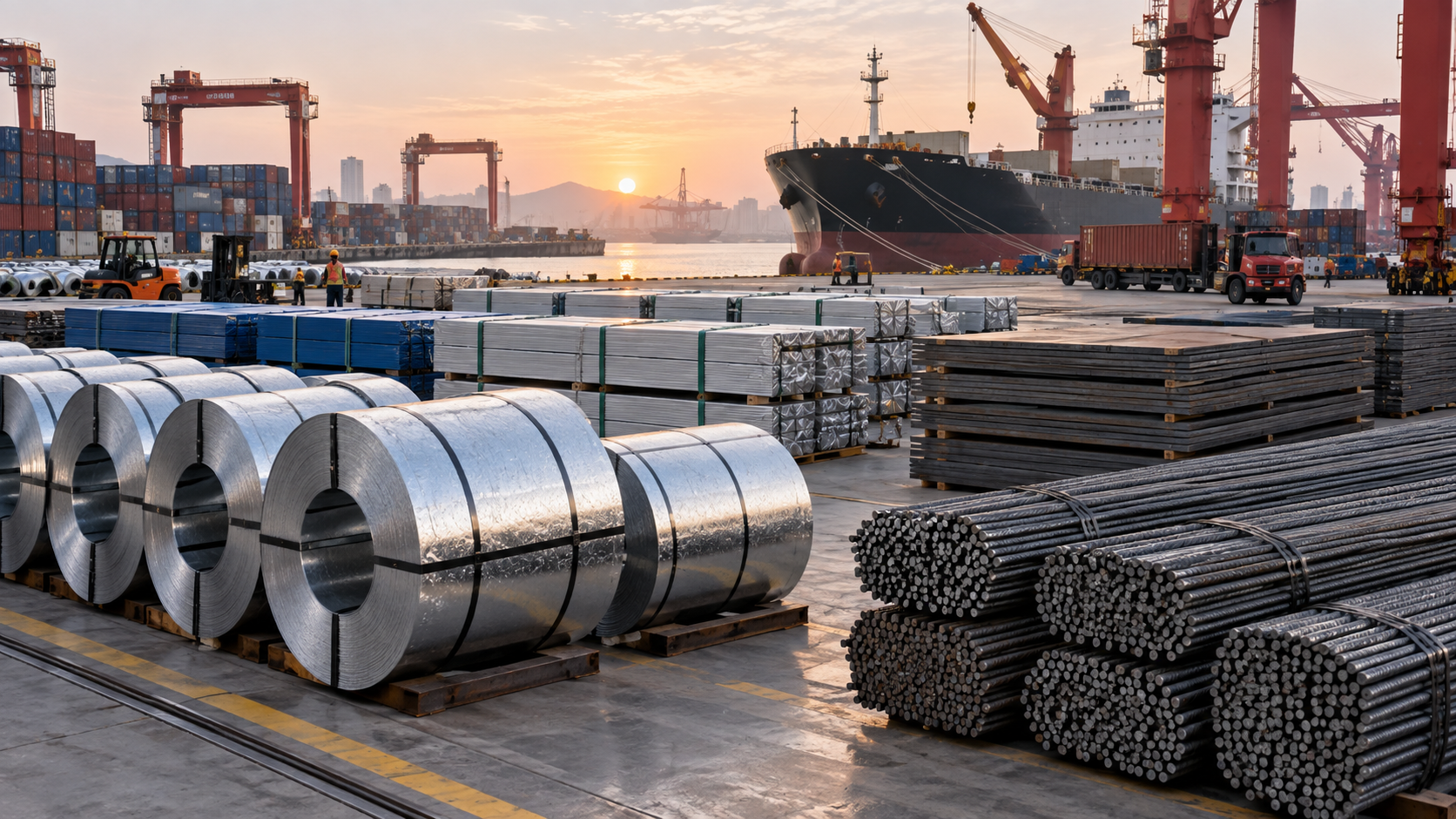
For practical procurement, galvanized sheet, coated coil, plate, rebar, pipe and structural steel no longer behave like one interchangeable export basket. Each product brings different packing, certificate, HS code and end-use questions. Buyers are therefore asking suppliers to prove availability and document fit before they treat a low offer as executable.
2) Galvanized sheet shows why buyers are selective.
Shanghai Metals Market reported that China's galvanized sheet exports fell sharply in August, with customs data showing 982,700 mt, down 10.66% month on month and 10.46% year on year. The signal is not simply weaker demand; it is a reminder that higher-value finished products can move unevenly when price, destination policy and order timing change at the same time.
That makes product selection a commercial discipline. A buyer sourcing galvanized sheet may need coating mass, surface treatment, passivation, packing and certificate language locked earlier than a buyer sourcing basic long products. If those details are left open, the shipment can lose time during inspection, document review or final customs matching.
3) Trade friction keeps compliance inside the quote.
SteelOrbis coverage of CISA comments added a second pressure point: Chinese steel products faced 111 initial trade remedy investigations between 2020 and the first half of 2026. For export buyers, this means trade-remedy risk is part of the quote comparison, not a late legal footnote.
The stronger inquiry now connects price with HS classification, origin wording, mill test certificate details, destination restrictions and end-use notes. Even when a product is not directly named in a current case, buyers still need a supplier who can keep the commercial invoice, packing list, certificate and loading record consistent.
4) YQ Steel's working view for September 25.
YQ Steel reads today's market as a finished-steel execution screen. Chinese supply remains broad, but the more reliable orders are the ones that match product specification, compliance wording and port handling before shipment planning begins.
For buyers, the cleanest next step is to send grade, standard, size range, coating or surface requirement, quantity, destination port, certificate language, packing method and target loading date in one inquiry. That lets the supplier confirm product availability, trade-route exposure and port readiness together, reducing the chance that an attractive offer becomes a delayed shipment.