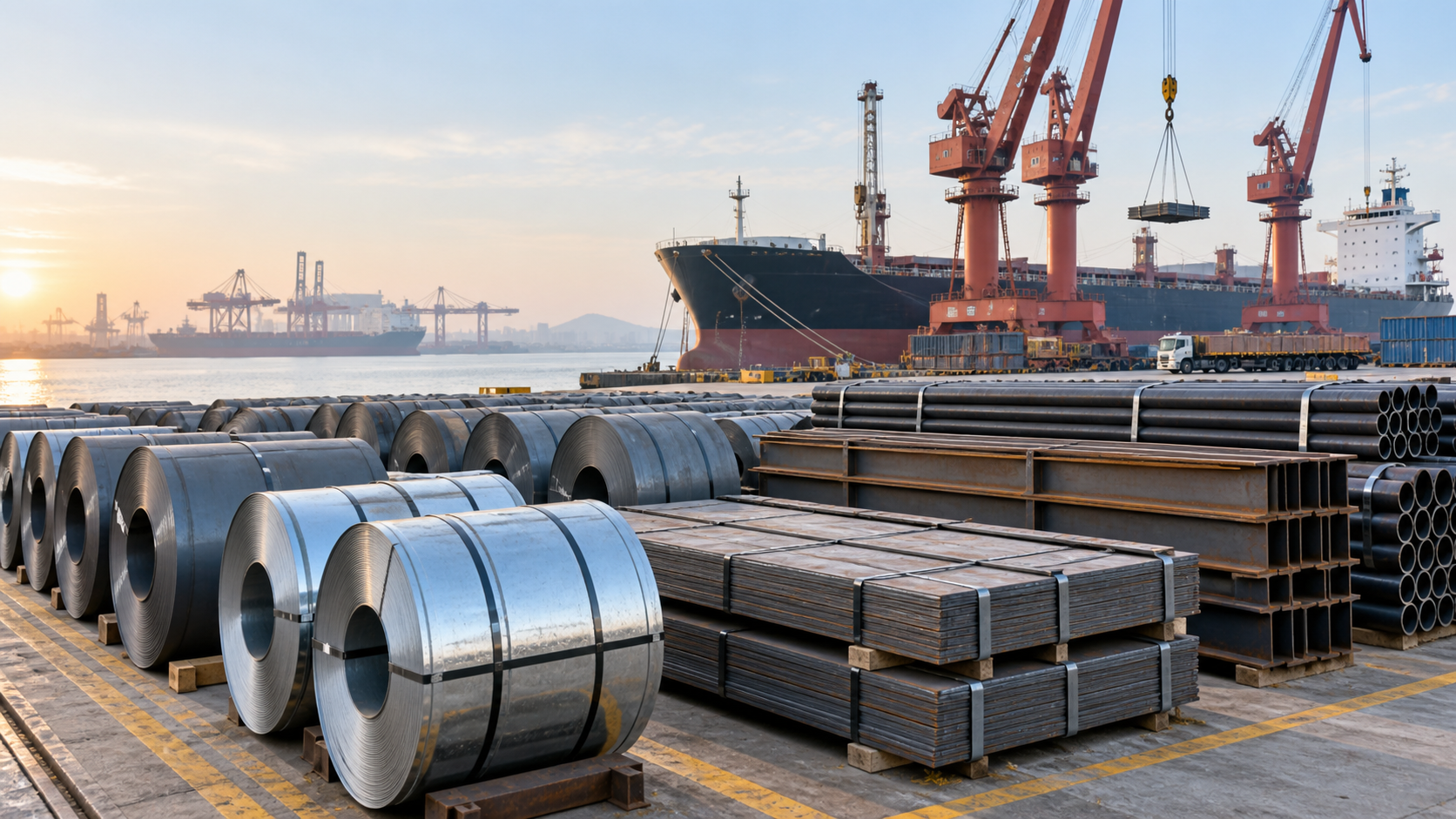
1) Coil prices are keeping product mix in focus.
September steel export buying is still active, but the cleanest orders are being filtered by product family before price. A recent Double Steel weekly report put tradable Chinese SS400/Q235 hot-rolled coil around FOB USD 500-510 per tonne and cold-rolled coil near FOB USD 560 per tonne, showing how flat products can move on different pricing tracks even inside one export inquiry.
That gap matters for buyers comparing hot-rolled coil, cold-rolled coil, galvanized coil, plate, beams, pipe and rebar. Each product line carries its own mill source, tolerance, packing, coating detail, certificate language and loading method, so mixed orders need item-by-item confirmation instead of one broad "steel" price check.
2) Tariff friction is still a landed-cost gate.
Trade friction is also shaping which destinations can absorb Chinese finished steel. Current tariff trackers continue to show U.S. steel items facing layered duty exposure under Section 232 and other measures, while broader tariff-rate updates keep steel and aluminum among the highest-pressure import categories for U.S. buyers.
For importers, the practical lesson is to treat tariff review as part of order creation, not a final customs task. HS code, origin statement, mill certificate, coating or processing description, shipment date and end-use wording should all match the destination requirement before cargo is packed or booked.
3) Port execution decides whether the price is usable.
Search results this week also point to continued attention on freight, container availability and port scheduling for steel cargo. The issue is not only ocean rate level; heavy products require clear bundle size, lifting plan, lashing method, cut-off timing and document readiness before a shipment date becomes realistic.
Coils, long beams, plate bundles and pipe nests may need different loading routes even when they are part of the same customer project. A stronger purchase order separates container cargo from breakbulk or project cargo early, so the exporter can reserve space and avoid last-minute repacking or port-side delay.
4) YQ Steel's working view for September 14.
YQ Steel reads today's market as selective, with opportunity for buyers who bring complete specifications and a practical shipment window. The stronger inquiry is the one that links grade, standard, dimensions, quantity by item, surface or coating requirement, packing, destination port, inspection plan and document language in one file.
For September 14 bookings, buyers should ask suppliers to confirm product-by-product availability, tariff-sensitive descriptions and loading feasibility at the same time. That approach gives China steel exporters room to quote more accurately, protect the shipment schedule and reduce avoidable landed-cost surprises.