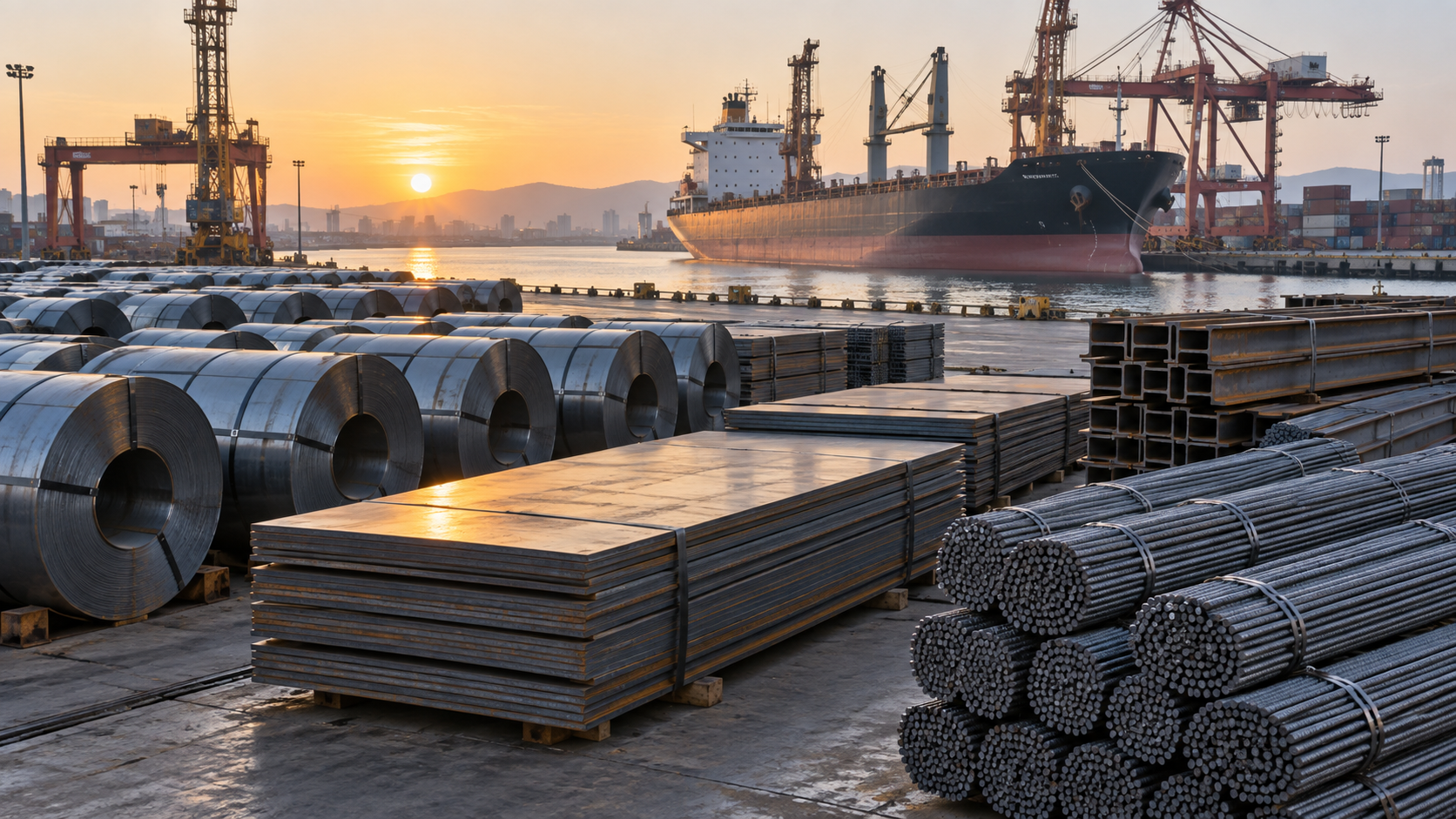
1) Export volume keeps the market active.
China's finished-steel export market is entering mid-September with enough volume to keep overseas quoting active. IndexBox's September 9 summary put August steel exports at 10.15 million tonnes, up 0.3% month on month and 6.8% year on year, while also noting lower steel imports and stronger iron ore arrivals.
That volume signal matters for buyers, but it should not be read as a single market price. Hot-rolled coil, galvanized sheet, plate, rebar, structural sections and pipe still move through different mill schedules, packing formats and inspection requirements, so the product mix is the first commercial screen.
2) Wider trade data supports selective demand.
Broader China trade reporting also points to resilient outbound demand. CNBC, citing official customs data, reported that China's August exports grew 25% in U.S. dollar terms from a year earlier, faster than July and in line with analyst expectations.
For steel buyers, the practical takeaway is not that every cargo should be rushed. Stronger export momentum can tighten attention around reliable order files: clear grades, dimensions, coating or surface needs, destination port, packaging, shipment window and inspection language should be settled before final price comparison.
3) Trade friction remains part of the cost file.
Trade policy is still shaping landed-cost decisions. The U.K.'s current steel trade measure keeps a 50% out-of-quota duty in place, with a transitional arrangement for relevant goods under contract before March 14, 2026 and imported between July 1 and September 30, 2026, while U.S.-focused tariff trackers continue to flag steel and aluminum duty exposure.
That means buyers should connect quotation work with documentation early. HS code, origin language, mill certificate details, product description, coating thickness, loading date and vessel plan need to match the duty logic in the destination market before cargo is released to port.
4) YQ Steel's working view for September 11.
YQ Steel reads today's market as active but disciplined. China-origin steel can still support overseas finished-steel demand, especially where buyers give exporters enough detail to separate coil, plate, bar, beam and pipe requirements from the first inquiry.
For new September 11 bookings, send the product standard, grade, size range, quantity by item, surface or coating requirement, packing request, destination port, target shipment window, inspection preference and document language together. A complete file helps reserve the right mill slot, avoid compliance surprises and keep port execution aligned with the buyer's delivery plan.