1) Product mix is still the lead question.
September inquiries are becoming more practical across China's finished-steel export lanes. Buyers are no longer asking only whether steel is available; they are asking which products can land cleanly in a specific destination with the right specification, mill timing and document file.
Recent data references show why that matters. CEIC's monthly export series for cold-rolled stainless sheet still points to a long-running, product-specific export cycle, while market summaries continue to separate rebar, hot-rolled coil, coated sheet, plate and stainless products instead of treating Chinese steel exports as one uniform flow.
2) Trade friction changes the best lane.
Destination risk is the second screen. RMI's recent review of carbon and trade policy noted that China ships relatively little hot-rolled coil to the EU because of anti-dumping duties, while hot-dip galvanized coil remains a more important China-origin steel export into that market.
That distinction is useful for everyday buying. A flat-steel inquiry should confirm HS code, coating description, grade route, origin language, mill certificate wording and anti-dumping exposure before the importer compares the FOB number with a local or regional alternative.
3) Demand and shipping need one order file.
Execution signals also remain mixed. Promisteel's recent market note pointed to lower five-product inventories and firmer apparent demand for rebar and hot-rolled coil, but also framed freight and trade risks as moving in different directions. That is a reminder that a stronger weekly demand print does not remove shipment risk.
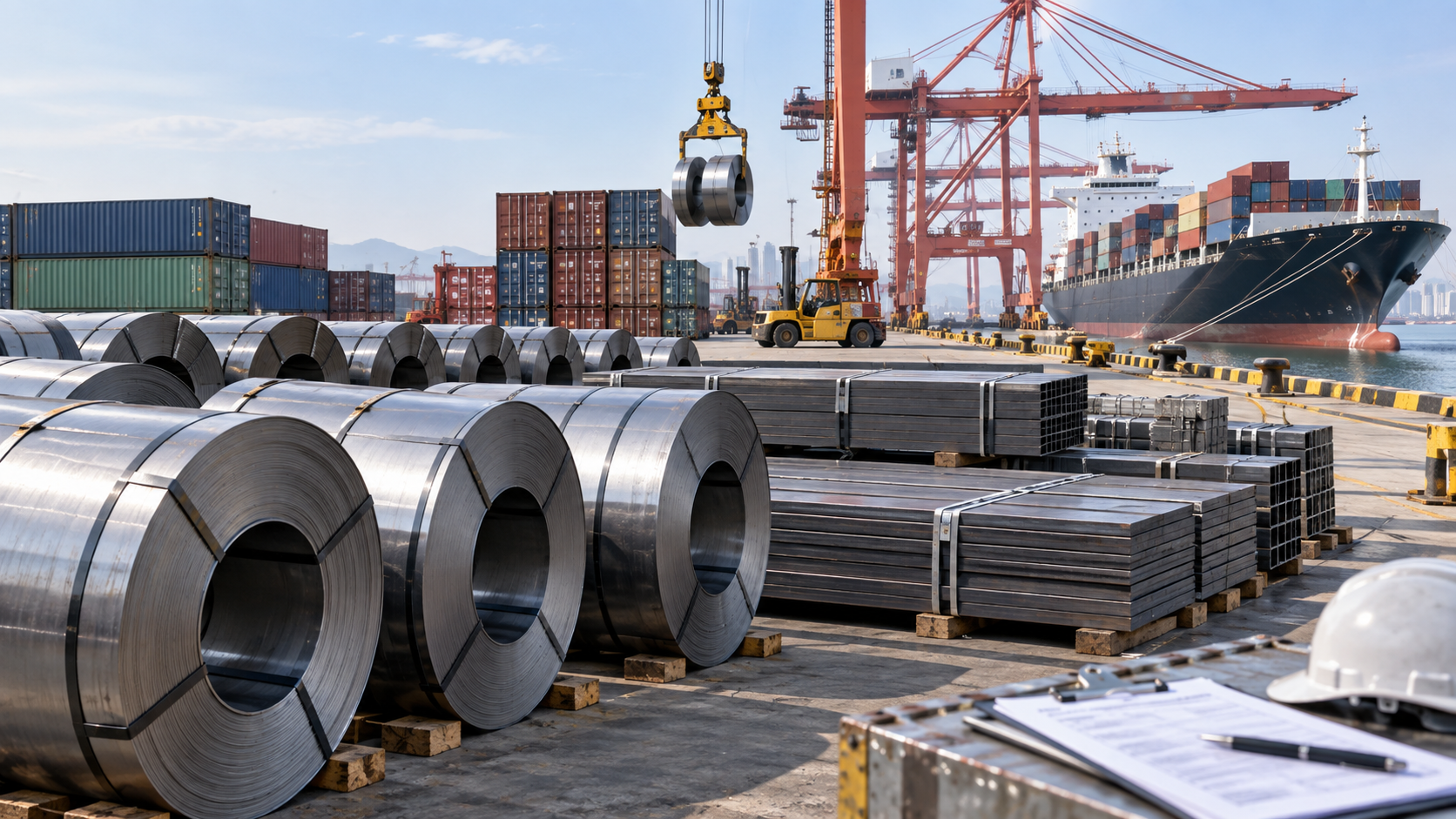
For September loadings, buyers should treat cargo readiness as part of the price. Coils, plate, rebar, tube and structural sections need different packing, lifting, moisture protection and stowage planning, and late document changes can turn an attractive quotation into a missed vessel window.
4) YQ Steel's working view for September 9.
YQ Steel reads today's market as selective rather than closed. Chinese mills and traders can still support finished-steel export orders, but the strongest files are specific about product, destination, compliance and loading method from the first inquiry.
For new September 9 orders, send product name, standard, grade, dimensions, quantity by item, coating or surface treatment, end use, destination port, requested shipment window, inspection requirement and document language together. That is the cleanest way to turn a product-mix conversation into an executable steel shipment.