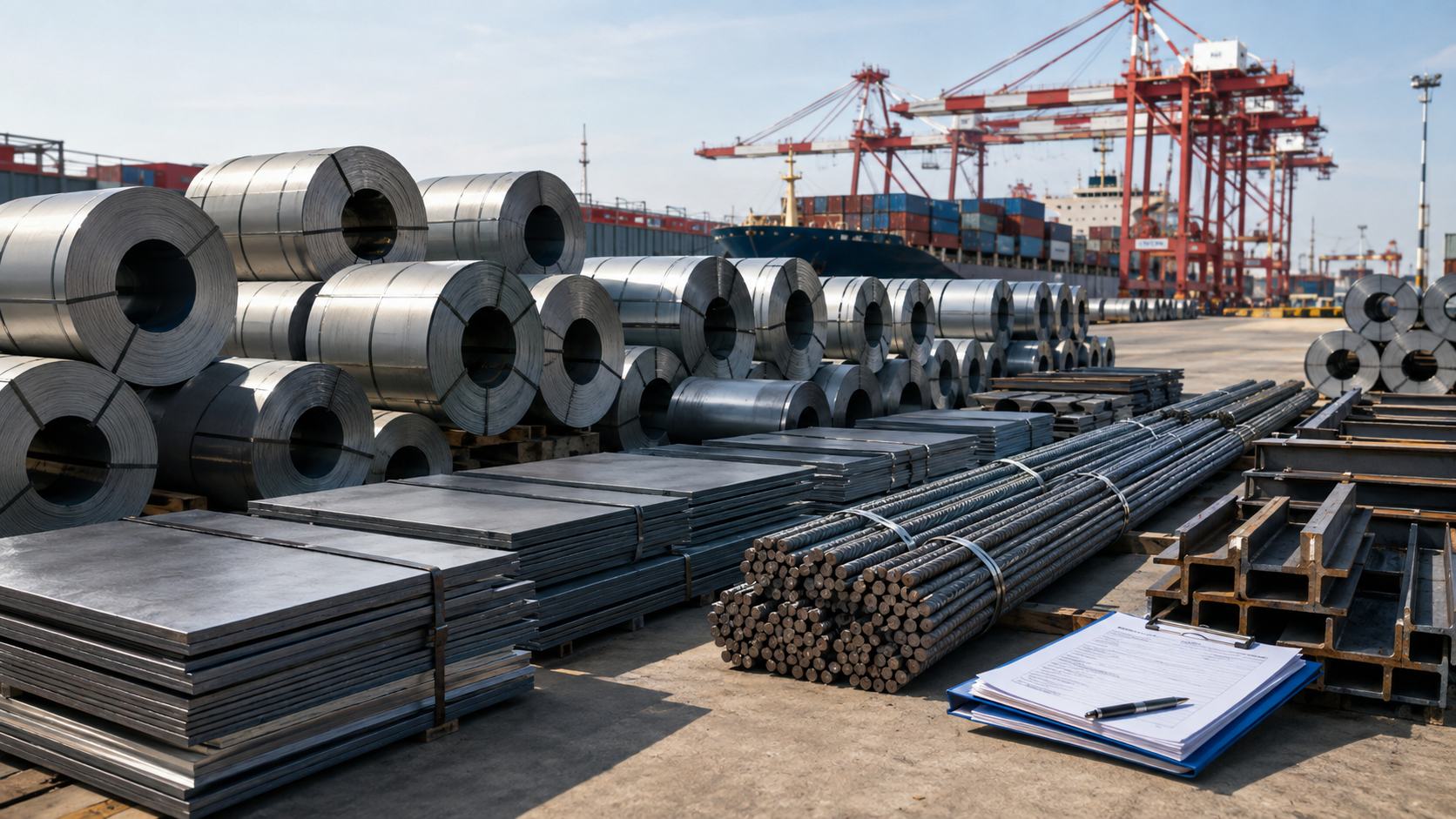
1) Finished steel is being screened by product lane.
September buying is starting with a more practical question: which Chinese finished-steel products can move cleanly through price, documentation and destination review? Recent market coverage notes that finished-steel shipments have weakened while semi-finished billet and slab exports have found more support, a split that keeps product mix at the center of overseas negotiations.
For buyers, that means hot-rolled coil, galvanized coil, color-coated sheet, cold-rolled material, plate, rebar, beams, angles and channel steel should not be bundled into one broad request. Each line needs its own grade, standard, size range, coating or surface detail, tolerance, packing method and end use so mills and traders can quote against real execution conditions.
2) Trade friction is changing how offers are judged.
Trade-defence pressure remains part of the buying calculation. Recent reporting highlighted the UK expiry of anti-dumping duties on Chinese and Russian cold-rolled steel, while broader 2026 analysis continues to describe pressure on China's conventional finished-steel export markets as more destinations review exposure to Chinese supply.
This does not remove the need for compliance checks. It makes them more destination-specific. Importers should confirm HS code, product description, origin wording, coating details, mill certificate requirements, inspection timing and applicable duty treatment before treating a September offer as commercially complete.
3) Port timing matters before Golden Week planning.
Export execution is also moving up the decision list as September bookings run toward holiday and fourth-quarter delivery windows. Shipping-market notes are already warning importers to plan China-origin freight before the Mid-Autumn Festival and Golden Week period, when factory, trucking, documentation and vessel schedules can become harder to adjust.
Finished steel adds another layer because coils, plate, long products and structural sections do not load the same way. Clear cargo splits, packing photos, lifting requirements, moisture protection, destination port details and document lists help suppliers reserve the right yard space and booking lane before cargo reaches the terminal.
4) YQ Steel's working view for September 7.
YQ Steel reads today's export market as selective but workable for buyers who arrive with complete order data. Product mix decides whether the inquiry fits the mill and destination; trade screening decides whether the landed cost is still acceptable; port execution decides whether the shipment can keep its planned window.
For new September 7 inquiries, send product name, standard, grade, size range, quantity by item, coating or surface requirement, packing preference, destination port, expected shipment window and document requirements together. In the current market, a well-specified finished-steel order is easier to quote, allocate and ship than a general tonnage request.