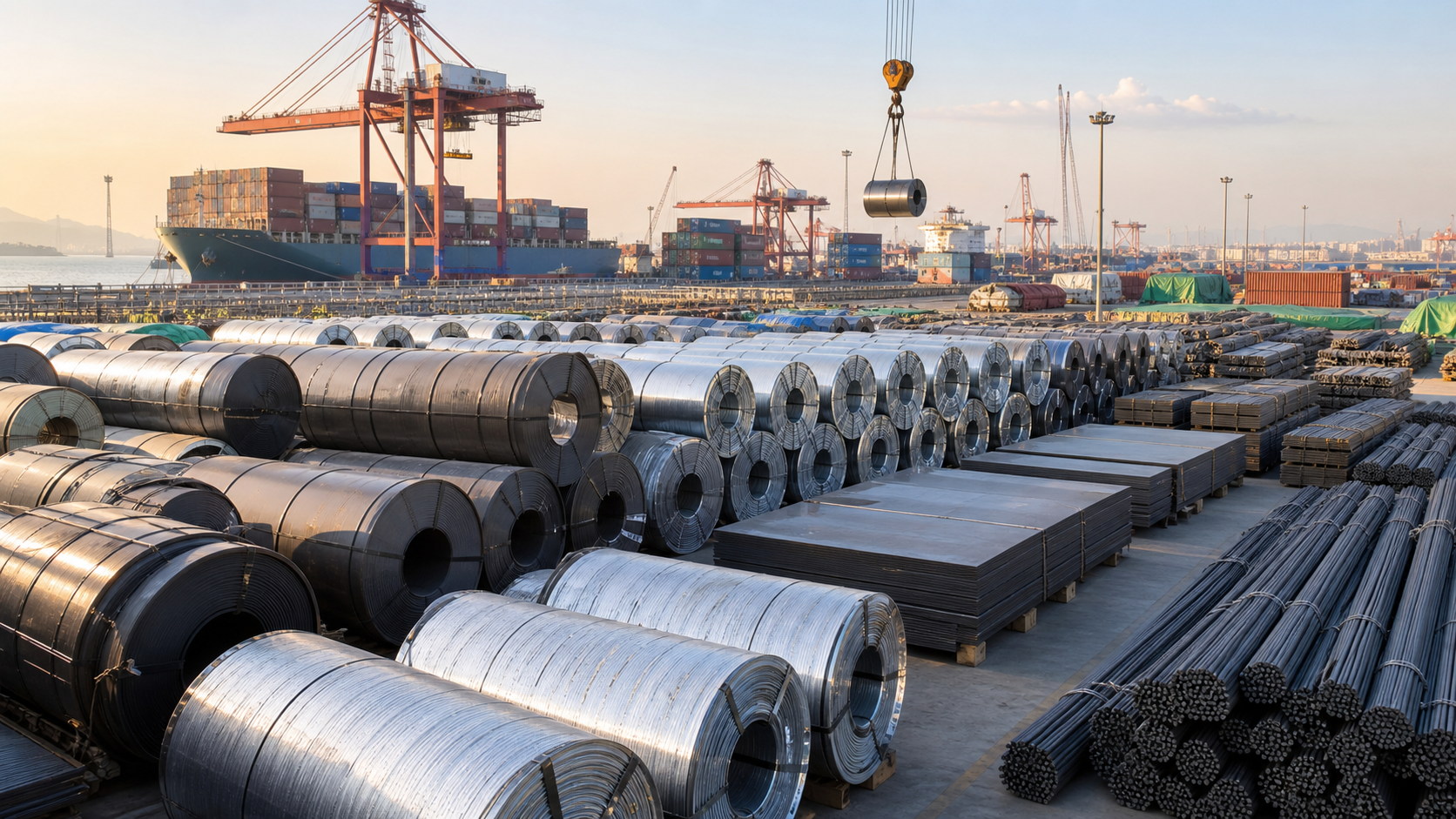
1) Finished-steel selection is becoming narrower.
Recent market coverage of Fitch Ratings' 2026 outlook points to pressure on China's steel output and exports, with finished-steel shipments weaker while semi-finished billet and slab exports have held stronger. For buyers, that split matters because mills are no longer treating every finished-steel inquiry as equal.
Orders for hot-rolled coil, galvanized coil, plate, rebar, beams, angles and channel steel should be separated by end use, grade, tolerance and packing before the buyer asks for a final number. A clear product file gives the supplier room to match the right mill, rolling schedule and cargo plan.
2) Trade friction is part of the price.
The same search window shows trade pressure still surrounding Chinese steel, including Japan's recent provisional anti-dumping duties on hot-dipped galvanized steel coil, sheet and strip from China and South Korea. That keeps coated and flat-steel cargoes under a sharper documentation screen.
For importers, the practical question is not only whether an offer looks low. HS code, origin wording, mill certificate details, coating description, declared use and destination restrictions should be checked before payment terms and shipment dates are locked.
3) Port readiness can decide allocation.
Port and shipping execution are becoming a commercial filter. Finished steel is heavy, space-sensitive and vulnerable to late changes, so a vague instruction on bundle weight, lifting method, moisture protection or shipping marks can slow an otherwise acceptable order.
Buyers with destination port, target vessel window, packing photos, inspection requirements and cargo split already prepared are easier to prioritize. In a selective export market, the route-ready order often receives a faster answer than the broad inquiry asking only for the cheapest quote.
4) YQ Steel's working view for September 3.
YQ Steel reads today's market as selective rather than closed. Project-backed demand and manufacturing-linked replacement buying can still support Chinese finished-steel exports, especially where the product mix is specific and the importing route is defensible.
For new September 3 inquiries, send product name, standard, grade, size range, quantity split, coating or surface requirement, packing preference, destination port and document needs together. In the current market, complete order data is becoming a real part of shipment reliability.