1) Export volume is no longer the whole story.
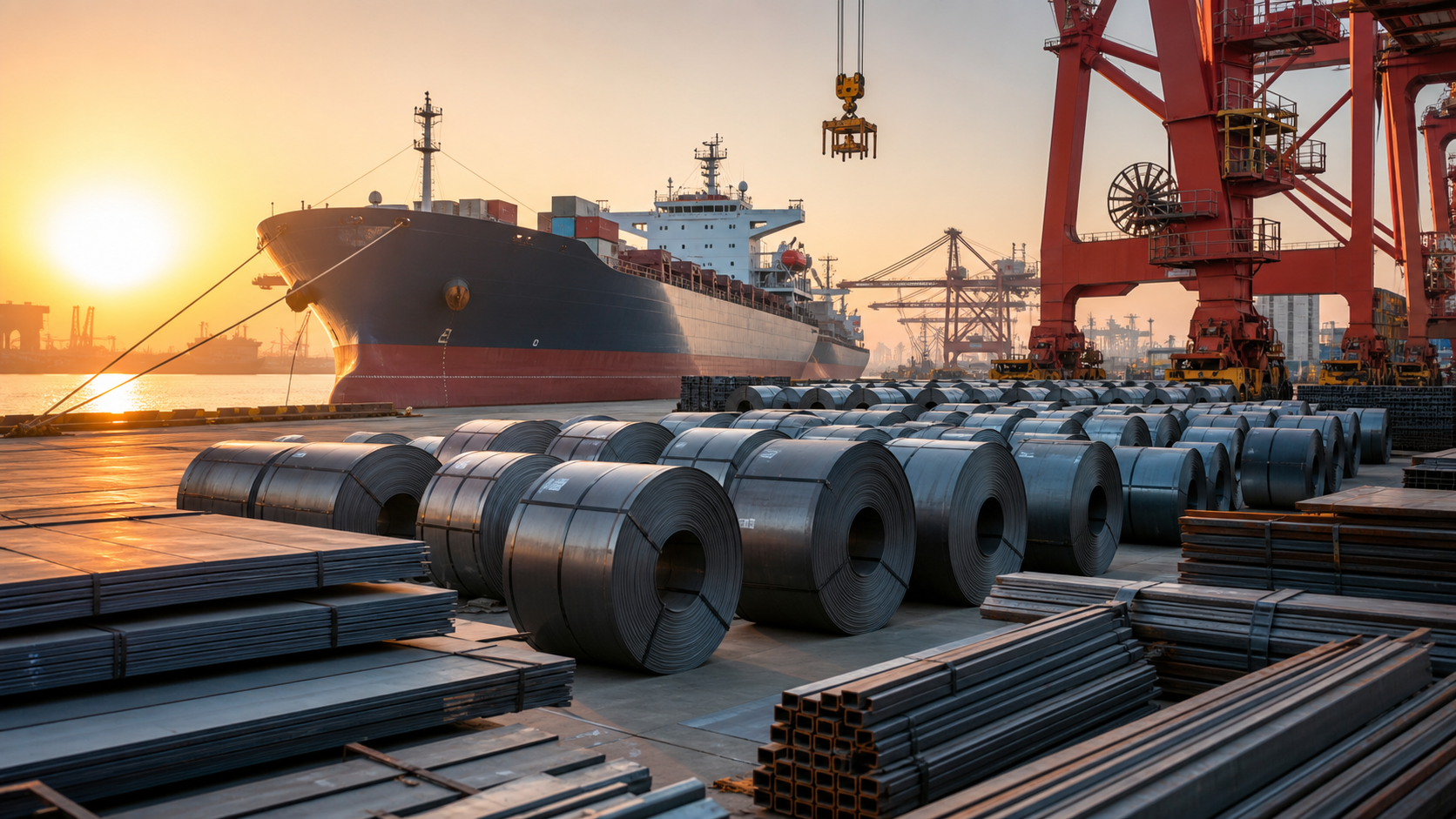
Late-July market coverage points to a new phase for China's steel exports: tonnage is still meaningful, but buyers are paying closer attention to which products can hold margin and market access rather than how many tons remain available. That favors a more selective export mix centered on finished plate, coil, and structural items tied to fabrication or industrial schedules.
For procurement teams, that is a practical change. A narrower mix usually means faster internal decision-making on specification, destination, and documentation, because the cargo already has a defined use case. In the current market, generic tonnage is easier to question, while finished steel with a clear project or processing purpose is easier to defend.
2) Trade friction is raising the value of destination discipline.
The second source angle is trade friction. Recent steel-market reporting highlights new or continuing anti-dumping pressure against China-origin material in several markets, and that matters even when a specific shipment is not directly blocked. Buyers now need to think about destination screening earlier, because the cost of a wrong market choice is higher than it was when demand was absorbing a wider mix of cargo.
This does not close the export lane, but it does make selection more important. Orders that line up product category, customs classification, and destination acceptance upfront have a better chance of moving without last-minute commercial erosion. That is why the export mix itself has become a strategic tool rather than just a list of available SKUs.
3) Real demand is strongest where manufacturing and shipbuilding stay active.
Search results also point to a demand split inside China. Construction remains soft, but manufacturing-linked sectors are still providing support, with shipbuilding especially visible after strong first-half completion data. That backdrop helps explain why plate and certain flat products still find traction: they connect more directly to workshops, yards, and processing lines that are still running.
In export terms, this means finished steel orders backed by machinery, shipbuilding, or committed fabrication schedules are more bankable than cargoes built on resale hope alone. When downstream demand is visible, the buying case is stronger not only on price, but also on loading priority, documentation readiness, and customer confidence at destination.
4) The workable lane is selective, documented, and schedule-driven.
Put together, the early-August signal is straightforward: China can still serve overseas buyers, but the safest lane is now narrower and more disciplined. Buyers should prioritize finished products with a known end use, match them to destinations with manageable trade risk, and treat shipment proof as part of the commercial package rather than an afterthought.
For YQ Steel customers, the implication is to build inquiries around product fit, destination clarity, and delivery timing from the start. In a market shaped by both trade friction and uneven demand, the best export order is not the broadest one. It is the order whose product logic, compliance path, and project timing all point in the same direction.