1) Export availability is no longer the same as exportability.
Recent market coverage says China's steel exports are entering a new phase defined less by simple production volume and more by shifts in product mix. In practical terms, that means the market still has tonnage, but not every ton carries the same chance of moving cleanly through pricing, compliance, and destination review.
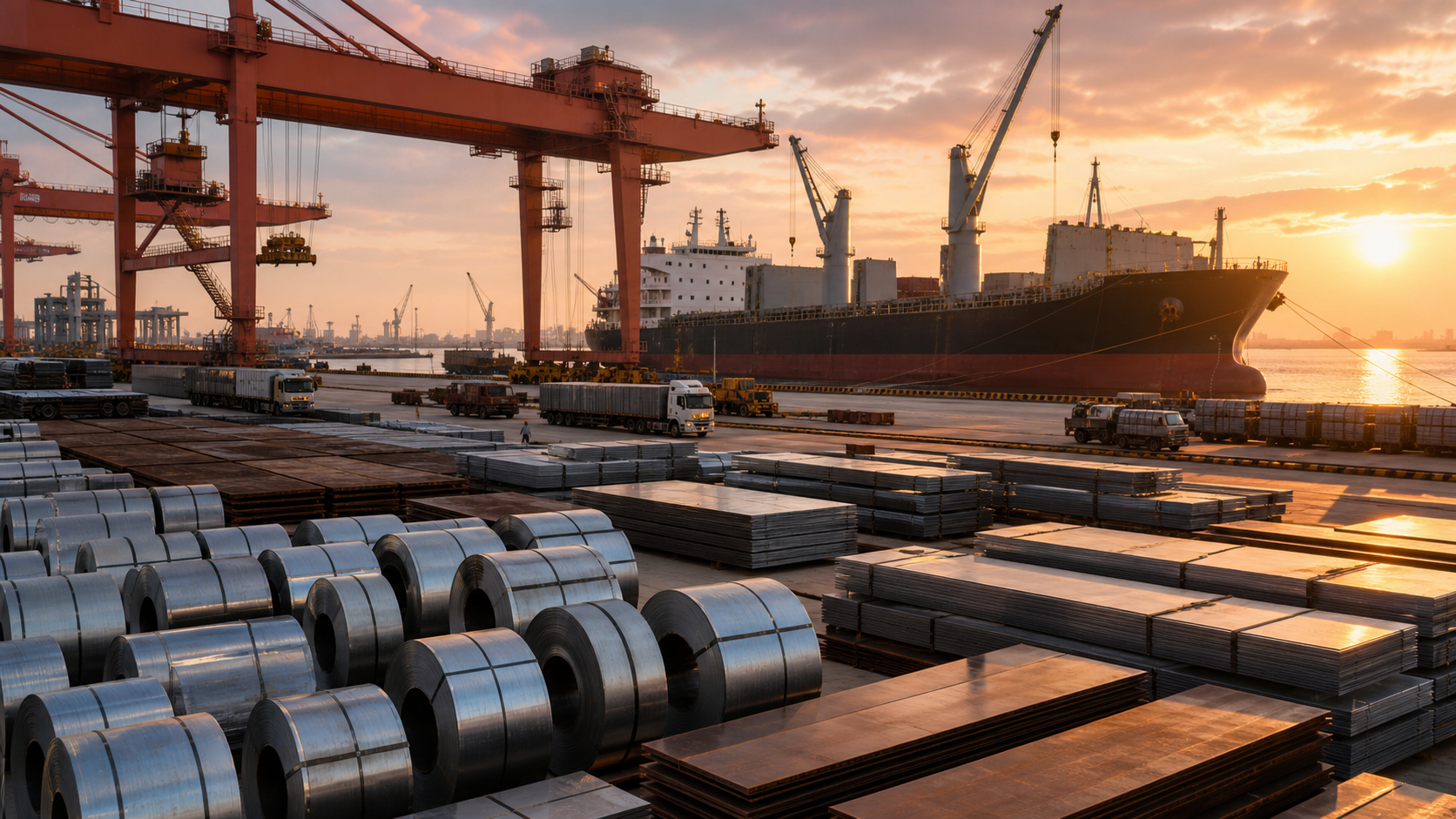
That shift naturally favors finished products with clearer downstream logic. Coils, plate, and structural orders connected to visible fabrication work are easier for buyers to justify than wide-open volume purchases that rely only on a cheap offer and assume everything else can be solved later.
2) Trade friction is widening beyond direct headline barriers.
A second late-July signal comes from trade policy. Vietnam has expanded anti-dumping action involving Chinese steel, while U.S. pressure on Mexico to align more closely with steel tariffs aimed at China shows that screening pressure is spreading through adjacent markets, not just through one obvious destination.
For exporters and importers, the consequence is straightforward: loosely defined cargo now carries more optionality risk. Orders with precise specifications, complete documents, and credible end-use explanations are easier to route, easier to defend, and less exposed if a destination suddenly becomes harder to serve.
3) Downstream demand still decides which finished steel can hold value.
The export story is also being filtered by end-use demand. Late-July outlook reporting on China's 2026 steel consumption shows construction remaining soft even as manufacturing segments keep parts of demand alive, which means not all finished-steel categories are receiving the same support.
That is why project-linked buying matters. Where shipbuilding, equipment manufacturing, or fabrication schedules remain active, buyers can still justify steel orders that meet a real delivery plan. Where the order depends only on inventory hope, the margin for error is much thinner.
4) The best buying window is narrowing toward project-backed orders.
Put together, the current market is not closed, but it is becoming more selective. China can still supply export steel, yet the cleanest business is clustering around finished products that pass three tests at once: a defensible product fit, manageable trade exposure, and visible downstream demand.
For YQ Steel buyers, the takeaway is to move earlier on orders tied to real execution and treat destination screening as part of the quotation process, not a later administrative step. In this environment, the safest tonnage is not the broadest tonnage, but the tonnage with the clearest use case.