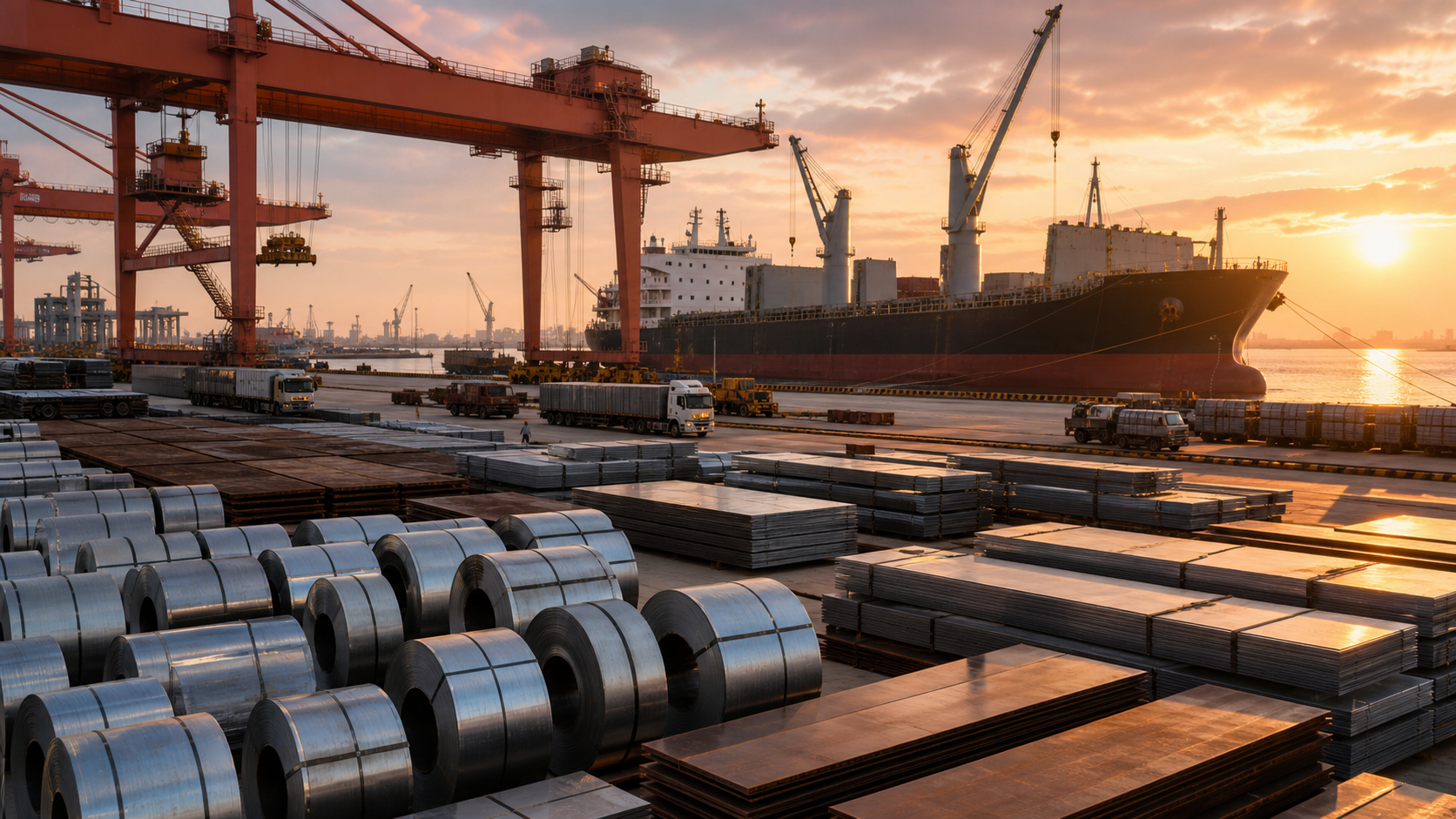
1) Export volume is holding, but buyers are no longer treating all tons the same.
Business Standard, citing current market reporting on China, said June steel export shipments rose 7% year on year to 10.3 million tonnes. That is enough to confirm that mills still have meaningful overseas reach even while domestic demand remains patchy.
But higher volume does not create easier buying conditions across the board. It usually does the opposite: it makes buyers separate generic cargo from finished steel tied to a clearer resale plan, fabrication schedule, or downstream project requirement.
2) Shipping signals say execution quality matters more when global flow is thinner.
AXSMarine's Q2 2026 steel-chain review said global seaborne bulk steel flows fell 7.5% year on year to 64.1 million tonnes, with China the only one of the four largest exporters to post shipment growth. That combination means China is carrying more relative weight inside a softer global shipping pattern.
For importers, that raises the value of orders that can move cleanly through port allocation, vessel planning, and document handoff. In a thinner trade environment, freight execution is no longer just logistics support; it becomes part of product quality.
3) Trade friction keeps rewarding a narrower finished-steel mix.
S&P Global's latest reporting described China's export rally as potentially short-lived, which is a useful reminder that policy pressure and destination-specific barriers can still interrupt otherwise workable volume stories. When that risk is visible, buyers lean away from interchangeable cargo and toward material with stronger end-use logic.
In practice, that favors coil, plate, and structural orders linked to active customer demand over speculative tonnage bought only because the offer looks temporarily competitive. The more clearly an order can explain its destination, use case, and paperwork chain, the more durable it becomes.
4) The best late-July posture is selective tonnage with cleaner port proof.
The signal for this week is not that China has run out of export momentum. It is that the winning orders increasingly combine acceptable mill pricing, finished-steel discipline, lower-friction destinations, and files that can survive real port execution without revision.
That is why buyers are becoming more selective rather than simply more aggressive. In today's market, the strongest steel order is the one that can be justified twice: first to the customer, and then again to the port, vessel, and trade screen that must carry it forward.