1) H1 volumes softened, but June still showed that export flow has not closed.
Steelorbis, citing China Iron and Steel Association data, reported this week that China's finished-steel exports reached 54.874 million mt in January through June 2026, down 5.6 percent year on year, while June stayed comparatively firm at 9.68 million mt. That combination matters more than a single headline number: the market is no longer rewarding blanket volume, but it is still absorbing well-placed tons.
For export sellers, that means the opportunity is moving away from indiscriminate offers and toward product groups with clearer destination fit. Orders tied to hot-rolled coil, plate, or structural items only work cleanly now when the buyer already knows where the tons will be converted, fabricated, or installed.
2) Trade friction is increasingly reshaping where Chinese steel can land cleanly.
Recent market commentary on EU quota changes and wider downstream protection shows the same pattern: even when Chinese steel remains price-competitive, more importing regions are using quota design, melt-and-pour rules, or indirect screening to raise the cost of a loose booking. The result is a narrower lane for standard offers and a bigger premium on countries and projects that can still clear without repeated document resets.
In practical terms, buyers need a destination strategy before they need a price. A lower headline offer loses its value quickly when the cargo faces quota uncertainty, anti-dumping exposure, or a customs path that makes release timing unpredictable.
3) Shipping and port execution are now part of the commercial decision, not an afterthought.
Middle East trade reporting over the past month has shown how quickly regional disruption can hit steel flows through diversion, congestion, and vessel re-routing. Even when the steel is available, the order quality changes if discharge ports, feeder options, or inland handoff plans become unstable after booking.
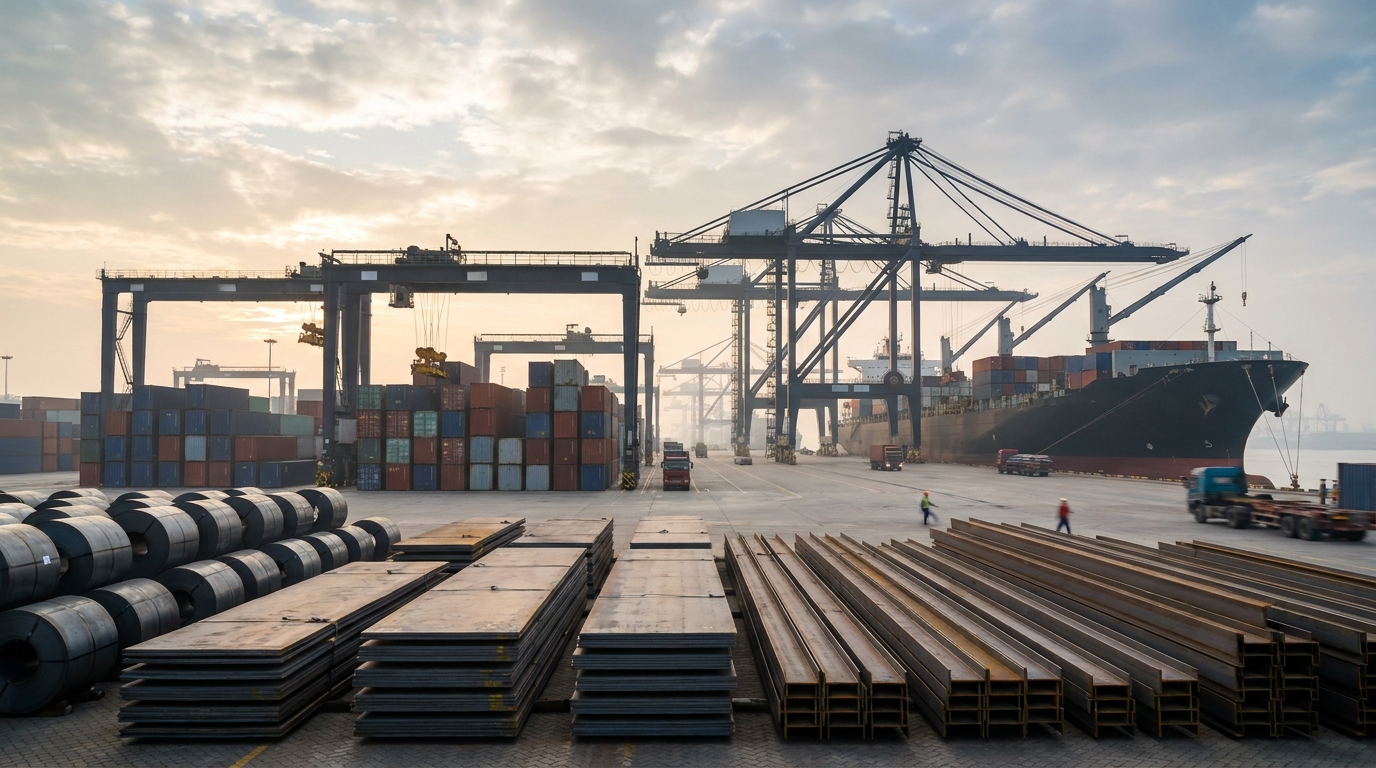
That is why stronger export files now start with execution logic: packaging that suits the destination, documents that match the declared route, and loading sequences that reduce re-handling risk once the cargo reaches port. The commercial edge is no longer just tonnage secured at the mill; it is tonnage that can keep moving after the first friction point appears.
4) Project-backed demand is becoming the safest home for finished steel tons.
When export flow is softer, trade gates are tighter, and shipping risk is more visible, the best demand signal is still a real project schedule. Buyers linked to fabrication programs, contractor replenishment, equipment manufacturing, or timed replacement cycles can screen quantity, spec, and delivery windows much earlier than opportunistic traders can.
The July 17 takeaway is straightforward in China time, even as the reference clock is still July 16 UTC: the export window remains open, but the winning strategy is cleaner mix plus cleaner execution. Finished-steel buying now works best when the order can survive both policy friction and the physical export path from yard to vessel to end use.