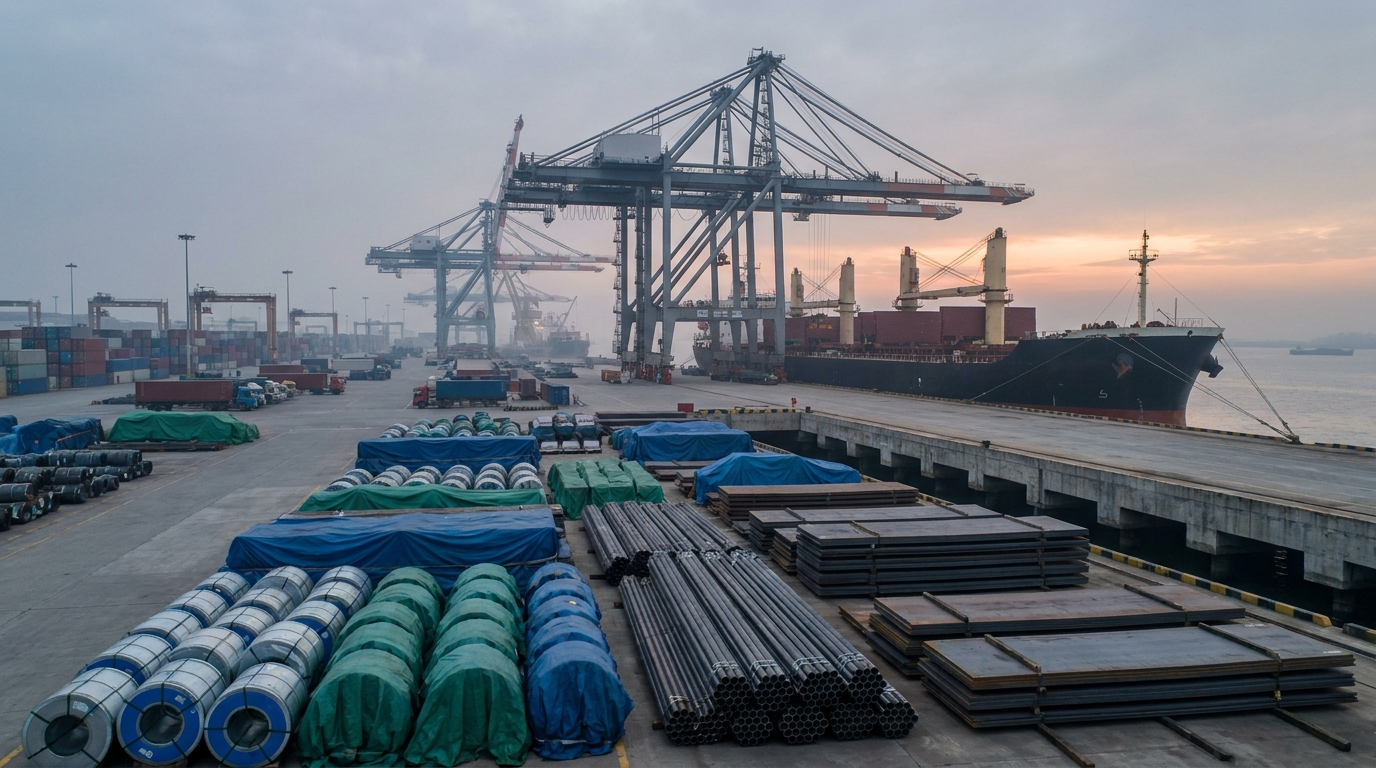
1) April's mix matters more than the headline export number.
Brave Search surfaced fresh Sxcoal reporting on June 8 showing that China's steel exports rose month on month in April and that higher-value-added products such as welded pipe and cold-rolled sheet helped lead the move. That is a more useful signal than a broad export-total headline because it suggests some overseas demand is still rewarding specification, processing, and application value instead of buying only the cheapest available tonnes.
通过 Brave Search 获取的 6 月 8 日 Sxcoal 最新报道显示,中国 4 月钢材出口环比回升,而焊管、冷轧板等高附加值产品成为拉动增长的重要力量。相比单纯看出口总量,这一信号更有操作价值,因为它说明海外部分需求仍在为规格、加工能力和应用价值买单,而不只是接受最便宜的吨位。
2) OECD's June 4 message shows why value and volume are no longer the same story.
The OECD said on June 4, 2026 that Chinese steelmakers shipped a record 131.2 million tonnes in 2025 while global steel exports declined overall and excess capacity is projected to reach 745 million tonnes by 2028. Just as important, the OECD noted that export unit values fell sharply even as tonnage rose. For buyers, that means a supplier can be active in export markets without automatically having pricing power across every product class; high-value cargo now has to defend itself through cleaner execution and more selective market placement.
OECD 在 2026 年 6 月 4 日指出,中国钢厂 2025 年钢材出口达到创纪录的 1.312 亿吨,而全球钢材出口总量却在下降,全球过剩产能到 2028 年可能升至 7.45 亿吨。更关键的是,OECD 同时强调,在吨位上升的同时,出口单价却明显下滑。对买家而言,这意味着供应商即便在出口市场非常活跃,也并不代表其在所有产品类别上都拥有同样的定价能力;高附加值货盘要想真正体现价值,必须依靠更干净的执行路径和更精准的市场投放。

3) Destination friction is rising at the same time.
Reuters reported on June 1 that China's finished steel exports to India more than doubled in April to roughly 232,000 metric tons, pushing Indian mills to warn about renewed pressure from cheap imports. That does not cancel the opportunity for higher-value exports, but it does show why buyers should separate commercial value from border risk. A technically better product can still face a weaker transaction outcome if the destination market has turned more defensive or politically sensitive.
路透社在 6 月 1 日报道,中国对印度的成品钢出口在 4 月升至约 23.2 万吨,同比翻倍以上,令印度钢厂再次对低价进口压力发出警告。这并不意味着高附加值出口机会消失,而是说明买家必须把“产品商业价值”和“边境风险”分开看待。即便技术和规格更好的产品,如果目的地市场已经转向更强防御或更高政治敏感度,交易结果仍可能弱于预期。
4) The practical June takeaway is to buy by execution path, not by slogan.
For June orders, the best discipline is simple: verify whether the target market actually rewards the extra value in the product, confirm the supplier can support the order with stable specifications and complete export documents, and test whether the destination lane is still commercially clean before negotiating the last dollars of price. High-value steel exports are still workable from China, but they are becoming more selective, which means the difference between a good order and a merely attractive quote is increasingly decided before the cargo reaches the port.
对 6 月订单来说,最实用的纪律其实很简单:先确认目标市场是否真的愿意为更高附加值产品付费,再确认供应商能否以稳定规格和完整出口单证支撑该订单,最后在谈最后几美元价差之前,先验证目的地航线是否仍然“商业上干净”。来自中国的高附加值钢材出口依然可做,但选择性正在增强,这意味着“一票好订单”和“一张看起来诱人的报价”之间的差别,往往在货物抵达港口之前就已经决定了。